

Structure of a dynamic microphone element
2025-04-14
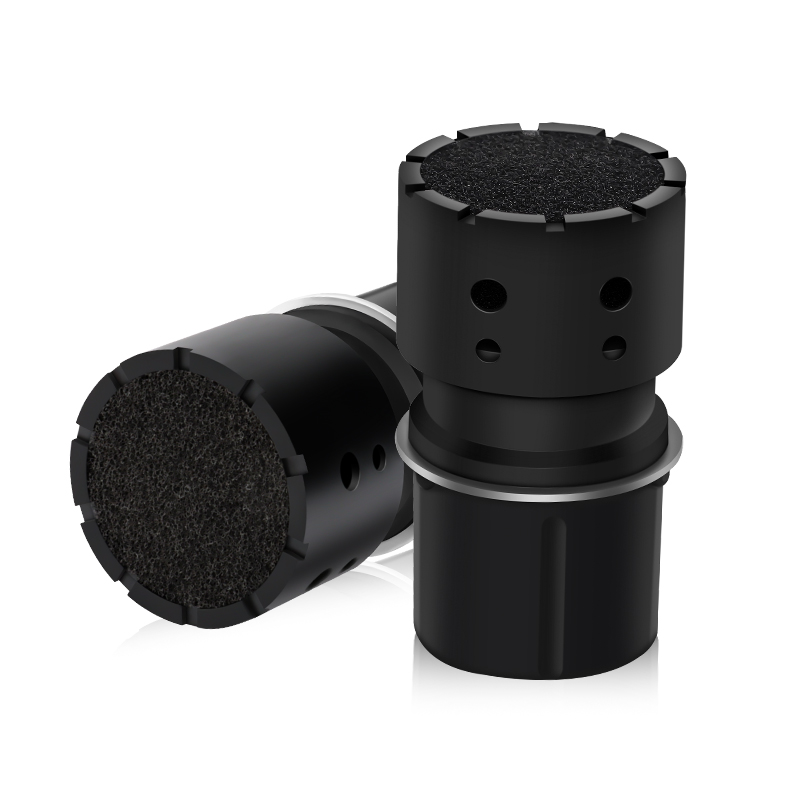
Classified by transducer structure, a dynamic microphone is an electromotive transducer, consisting of a voice coil, a metal diaphragm, a protective cover, a magnet, and a transformer. The working principle of a dynamic microphone is to place a conductor in a magnetic field, use sound to stimulate the vibrating system to vibrate, and generate electromotive force on the conductor through electromagnetic induction. This converts the sound signal into electrical energy.
If we make a conical dynamic loudspeaker from paper or metal, it can also become a dynamic microphone. It's just that the output voltage of such a transducer will be smaller, and the frequency response will not be very good. Conversely, the voice coil working in the loudspeaker magnet can also generate voltage. If the dynamic microphone is used as a tweeter and an input signal is added, it can also reproduce sound well. It's just that the coil of the dynamic microphone is not as thick as that of the loudspeaker, so it cannot withstand excessive input and excessive amplitude.
From the characteristics of the dynamic microphone, its frequency response, output voltage, and maximum allowable output depend on factors such as the coil, diaphragm size, magnetic flux density of the magnetic circuit, and diaphragm vibration speed.
The specific structure of the dynamic microphone is shown in the figure below:
The electric transducer we often talk about mostly refers to the dynamic microphone. The structure of the dynamic microphone is relatively simple, mainly composed of a voice coil, a metal diaphragm, a protective cover, a magnet, and a transformer. The specific structure of the dynamic microphone is shown in the figure below:
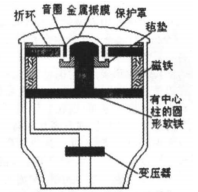
Structural diagram of a dynamic microphone
In addition, the dynamic microphone also uses the most basic electromagnetic transduction principle—using the cutting magnetic lines of force to generate induced voltage for acoustic-electrical signal conversion. The following is the transduction principle of the dynamic microphone:

Because dynamic microphones have the advantages of stability, reliability, ease of use, and low inherent noise, they have always been the oldest "trump card" transducer. Even today, dynamic microphones still have very strong vitality.
However, dynamic microphones also have shortcomings, such as low sensitivity, susceptibility to magnetic induction noise, and narrow frequency response. Due to unavoidable factors such as materials and structure, compared with condenser microphones, dynamic microphones have greater application limitations. Especially with the development of microelectronics technology, condenser microphones have a slight advantage over dynamic microphones in sensitivity in terms of market application.
In order to improve the performance of dynamic microphones, in recent years, acoustic experts have focused on the technical discussion and improvement of dynamic microphones, such as structure and appearance. In order to improve the pickup of high-frequency sounds, technicians have also specially optimized the dynamic vibration system, which has greatly improved the performance of dynamic microphones. Today, dynamic microphones are not only used in speech broadcasting and sound amplification but have also entered the professional singing field.
Of course, if you want to pursue better performance of dynamic microphones, technicians must not only optimize the vibration system of dynamic microphones but also consider factors such as acoustic materials, acoustic structure, and magnetic circuits. We look forward to dynamic microphones bringing more surprises to acoustic applications.
Contact Information
No. 8 Gongye 4th Road, Encheng Sub-district, Enping City, Jiangmen City, Guangdong Province
Fax: +86-750-7187986







Online Message
Social Media


