

Utility model patent: Microphone capsule with modular assembly structure
2025-04-21
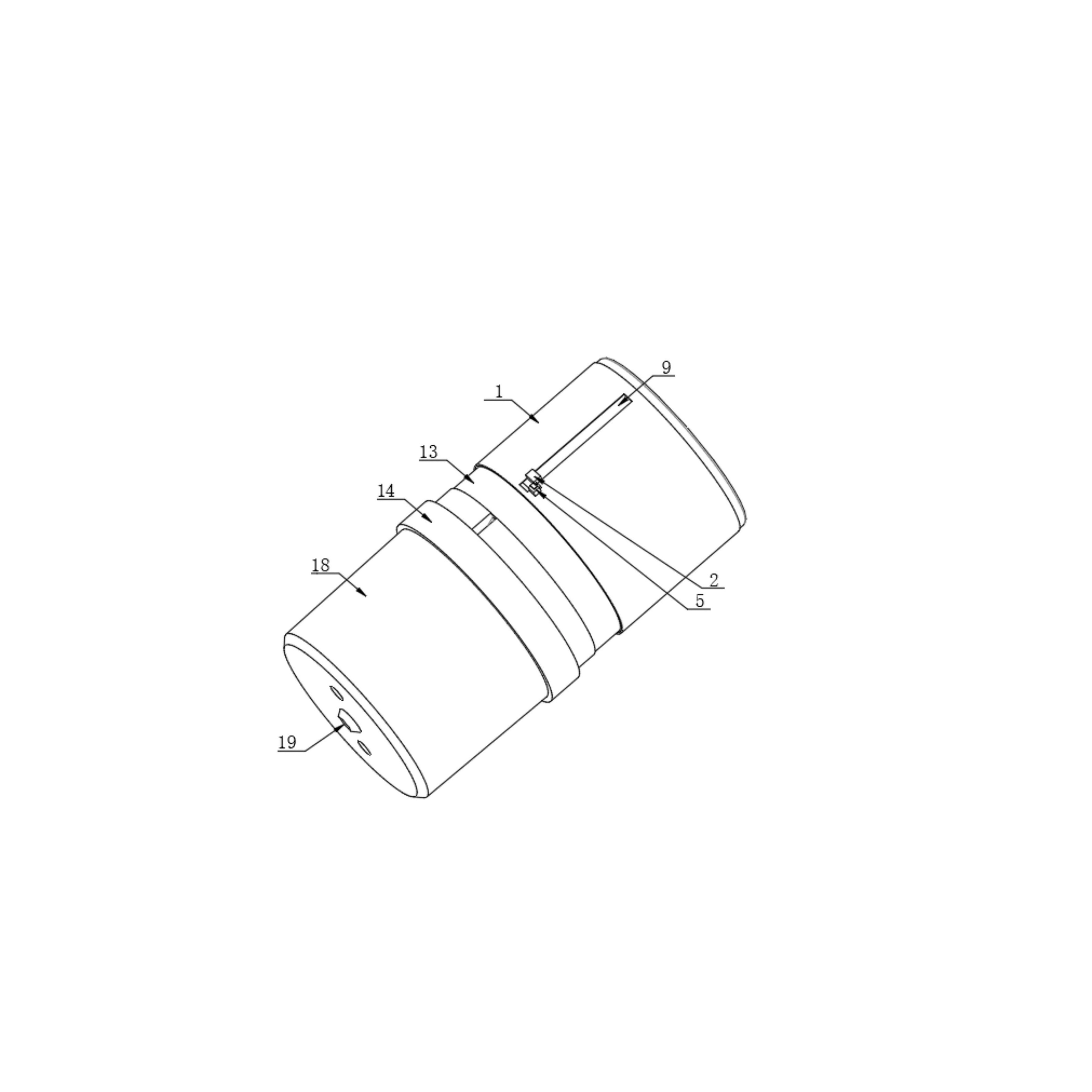
Application Number: CN202221431734.1
Authorization Announcement Number: CN217693698U
Technical Field
The present utility model relates to a microphone capsule, specifically a microphone capsule with a modular assembly structure, belonging to the technical field of microphone capsules.
Background Technology
Wireless microphones are divided into three frequency bands: FM band, VHF band, and UHF band. Below is a brief introduction to the performance and usage scenarios of each frequency band, hoping to provide some help for your purchase. Everyone knows FM radio. The frequency of FM radio is 88-108MHz. The frequency of FM band wireless microphones is above 108MHz. Generally, it is between 110-120MHz, so the signal of FM radio will not interfere with the FM band wireless microphone, but it will be affected by other noise. The advantages of FM wireless microphones are: simple circuit structure, low cost, and easy for manufacturers to produce. The disadvantages are: poor sound quality, frequency changes with time/ambient temperature, and frequent poor reception and disconnection. Loud shouting into the microphone will cause the sound to break up. Usage scenarios: Very low usage requirements, not much demand for sound quality. FM wireless microphones can be used when only sound is required.
In the use of traditional microphone capsules with modular assembly structures, a protective cloth cover is usually used to cover the capsule to prevent saliva from being sprayed onto the capsule by the user, causing contamination. However, when protecting the capsule, it is not easy to put the protective cloth cover on the microphone capsule, which wastes time and manpower. Therefore, the microphone capsule with a modular assembly structure can be improved to solve the above problems.
Technical Problems Solved
The purpose of this utility model is to solve the above-mentioned problems by providing a microphone capsule with a modular assembly structure, to solve the problem that in the use of microphone capsules, a protective cloth cover is usually needed to cover the capsule to prevent saliva from being sprayed onto the capsule by the user, causing contamination. However, when protecting the capsule, it is not easy to put the protective cloth cover on the microphone capsule, which wastes time and manpower.

Contact Information
No. 8 Gongye 4th Road, Encheng Sub-district, Enping City, Jiangmen City, Guangdong Province
Fax: +86-750-7187986







Online Message
Social Media


